

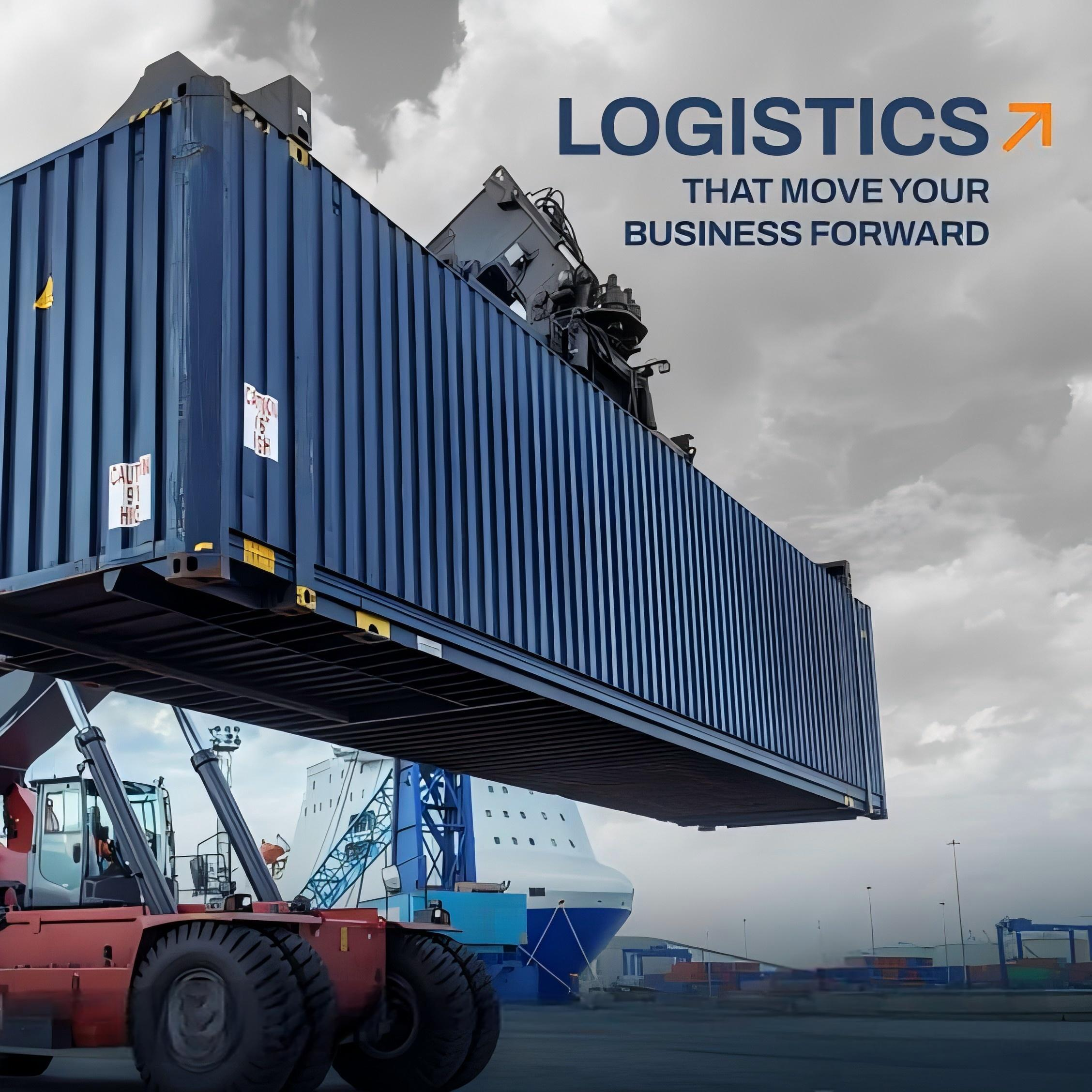
Shipping After China Golden Week: A Strategic Logistics Guide for 2026
Tight cargo-ready windows demand clearer sequencing when arranging International Freight without a validated booking path. Late document packs and unconfirmed intake slots often push cargo past the only workable sailing or flight window. China Freight Logistics provides scoped booking support so readiness dates and cut-offs stay synchronized. This 2026 guide details booking checkpoints and execution benchmarks for auditable corridor decisions.
Key Takeaways
Post-Golden Week surge usually results in a 15-20% increase in spot freight rates due to high demand.
A standard 40HQ container should be loaded to 65-70 CBM to optimize space and minimize per-unit costs.
Air freight chargeable weight is calculated as the greater of actual weight or volumetric weight (CBM x 167 kg).
Booking space at least 14 days before the anticipated cargo-ready date is critical to bypass immediate post-holiday port delays.
What Should Buyers Know First About Shipping After China Golden Week?

The primary challenge after the Golden Week holiday is the immediate accumulation of cargo that manufacturers held back during the week-long production halt. This sudden influx of goods creates a massive surge in demand for outbound transportation, which frequently overwhelms available carrier space and port handling capacity. Sophisticated shippers recognize that the holiday is not just a one-week pause but a catalyst for systemic delays that can linger for several weeks as the supply chain attempts to normalize operations.
To mitigate these risks, buyers must prioritize early communication with their suppliers regarding true cargo-ready dates rather than relying on estimated timelines provided before the holiday. When cargo is ready simultaneously across multiple factories, the competition for container equipment and vessel space intensifies, often leading to roll-overs where containers are left behind at the port. By confirming space allocations early, you significantly reduce the likelihood of your cargo sitting in a warehouse during the peak post-holiday pressure window.
Successful execution in this environment requires a disciplined approach to managing internal expectations and external logistics partnerships. You should ensure that all commercial invoices and packing lists are finalized and verified for accuracy well before the cargo is moved to the port or terminal. Taking these steps allows your sea freight team to process documentation efficiently, ensuring that your shipments remain compliant and ready for the first available departure window.
Field note: Monitor port dwell times closely during the two weeks following the holiday.
Common mistake: Assuming all factories will return to full production capacity on the first day back.
Risk alert: Late documentation is the leading cause of container roll-overs during peak periods.
How Do Routing and Gateway Choices Affect This Lane?
The choice of gateway is a critical determinant of transit speed and reliability, especially when dealing with the post-holiday cargo backlog. Major hubs often experience the most severe congestion, as the sheer volume of containers attempting to clear the gates simultaneously can lead to significant drayage delays and yard density issues. Shippers who choose to route through secondary ports may find slightly more capacity, though this must be weighed against the potential for longer inland transit times to the final destination.
When planning your routing, consider the proximity of your supplier to the origin port and the frequency of direct sailings or flights to your specific destination. Direct services typically offer the most stable transit windows, while transshipment routes—though sometimes cheaper—introduce additional handling points where cargo could be delayed during the high-pressure recovery phase. Our logistics services often involve evaluating these trade-offs to select a route that aligns with your specific landed-cost and delivery-window requirements.
Furthermore, gateway selection must account for the specific infrastructure available for your cargo type, such as reefer plugs for perishables or specialized cranes for oversized equipment. If your cargo requires specific handling, ensure that the chosen port or airport is fully equipped to provide these services under high-load conditions. Documenting these requirements in your booking request provides a clear roadmap for your logistics provider to secure the necessary infrastructure, preventing costly delays at the origin terminal.
| Equipment Type | Internal Volume (CBM) | Max Payload (kg / lbs) | Optimal Commodity Fit |
|---|---|---|---|
| 20ft Standard (20GP) | 28–30 CBM (26 usable) | 21,800 kg / 48,000 lbs | Dense, heavy cargo (machinery, auto parts, metals) |
| 40ft Standard (40GP) | 58–60 CBM (54 usable) | 26,500 kg / 58,400 lbs | General packaged cargo, standard palletized loads |
| 40ft High Cube (40HQ) | 68–76 CBM (68 usable) | 26,500 kg / 58,400 lbs | Bulky, lightweight goods (furniture, textiles, electronics) |
| 45ft High Cube (45HQ) | 85–86 CBM (78 usable) | 27,500 kg / 60,600 lbs | High-volume consumer retail distribution |
Field note: Secondary ports may offer lower gate fees but increase inland transport risk.
Common mistake: Selecting a route based solely on price without considering port congestion levels.
Risk alert: Avoid transshipment hubs if your cargo has a firm, non-negotiable delivery deadline.
Cost vs Speed: Decision Rules for This Corridor Shipments

Balancing cost and speed is the central tension of post-holiday shipping, where the desire for rapid replenishment often clashes with inflated peak-season spot rates. If your business model relies on maintaining lean inventory levels, you may be tempted to opt for air freight; however, the cost of air transit can quickly erode margins if not managed correctly. Conversely, ocean freight offers significant cost savings for bulk items but demands a longer planning horizon to account for potential sailing delays and extended port dwell times.
The decision framework should be built on the ‘total landed cost’ principle, which includes not just the freight rate, but also the costs of inventory holding, potential stockouts, and expedited handling fees. For general cargo, LCL sea freight provides a flexible middle ground, allowing for smaller shipments to move without the high cost of a dedicated container, provided the consolidation process is well-managed. Utilizing warehouse services for pre-sorting can further reduce destination processing time, effectively lowering your overall landed cost.
Ultimately, your decision should be driven by the criticality of the cargo and the remaining buffer in your supply chain. If the items are intended for a time-sensitive promotion or a critical manufacturing line, the premium for expedited shipping is often justified as an insurance policy against the much higher cost of a business disruption. If the cargo is standard replenishment inventory, sticking to the most cost-effective ocean route—with a slight buffer for delays—remains the most sustainable long-term strategy for your organization.
Field note: Calculate inventory carrying costs when comparing air vs ocean transit times.
Common mistake: Ignoring the hidden costs of LCL consolidation delays at origin.
Risk alert: Always request an all-in quote to avoid surprise destination surcharges.
What Transit Timeline Should You Expect?
In the immediate aftermath of Golden Week, standard transit timelines often face significant pressure, with delays becoming common across both ocean and air modes. While a typical ocean transit from major Chinese ports to international destinations might be estimated at 30 days, it is prudent to factor in an additional 7 to 10 days of ‘buffer time’ to account for port congestion and equipment shortages. These delays are rarely the fault of the carrier alone; they are systemic challenges resulting from the simultaneous return of thousands of exporters to the market.
For air freight, the situation is slightly more stable but still subject to capacity constraints, as passenger and freighter space is often fully booked in advance. Transit times for air shipments typically range from 3 to 7 days, including customs clearance, provided your documentation is filed correctly and the cargo is ready at the terminal. Our company provides air freight tracking to give you real-time visibility, allowing you to manage your downstream supply chain expectations with high accuracy even during peak periods.
To manage these expectations, maintain constant communication with your freight partner regarding the status of your shipment at every milestone. If you notice an unexpected change in the vessel or flight schedule, act immediately to assess the impact on your delivery window and consider alternative routing if the delay exceeds your tolerance. Proactive management of these transit timelines is the hallmark of a mature supply chain strategy, ensuring that you remain in control of your inventory availability regardless of the broader market conditions.
| Leg/Phase | Estimated Days | Dwell/Wait | Risk Notes |
|---|---|---|---|
| Factory Pickup | 1-2 | Low | Traffic delays |
| Origin Port/Airport | 3-5 | High | Congestion |
| Mainhaul | 20-30 | None | Weather/Vessel |
Field note: Add a minimum 7-day buffer to all transit estimates during October.
Common mistake: Using pre-holiday transit times for post-holiday planning.
Risk alert: Carrier schedule changes are common during the post-holiday recovery phase.
How Are Landed Costs Typically Built?
Landed cost is the comprehensive sum of all expenses associated with moving your product from the factory floor to your final destination, including product cost, freight, insurance, duties, and handling fees. After Golden Week, several of these components, particularly freight and handling, are prone to volatility. Understanding this breakdown is essential for maintaining accurate pricing models and avoiding the unpleasant surprise of discovering that shipping costs have eroded your profit margins unexpectedly.
Many importers make the mistake of focusing only on the ‘ocean freight’ or ‘air freight’ rate, neglecting the significant impact of origin and destination accessorials. These can include container drayage, terminal handling charges, customs entry fees, and document processing costs. Utilizing professional about information as a reference for your logistics planning, you can ensure that your cost models incorporate all necessary variables, providing a realistic picture of your true per-unit landed cost.
To build a robust landed cost model, categorize your expenses into fixed and variable buckets. While items like duties are generally predictable based on the HS code, freight and handling costs should be modeled with a sensitivity analysis that accounts for potential surcharges. By maintaining this level of financial visibility, you can make informed decisions about whether to absorb cost increases, pass them on to customers, or switch to more efficient modes of transport, thereby protecting the overall profitability of your international operations.
Field note: Include a 5-10% contingency fund in your landed cost model for peak season.
Common mistake: Failing to account for destination storage and demurrage in the landed cost calculation.
Risk alert: Fluctuating fuel surcharges can significantly impact ocean-heavy cost models.
Which Documents and Compliance Checks Apply?
Accurate documentation is the bedrock of international trade, and any error in your paperwork can lead to severe delays, fines, or even the seizure of your goods by customs authorities. Following Golden Week, customs agencies often increase their inspection rates as the volume of trade resumes, making compliance even more critical. Ensuring that the commercial invoice, packing list, and bill of lading (or air waybill) are perfectly aligned is not just a best practice—it is an operational necessity.
Each destination jurisdiction has unique requirements for filings and documentation that must be respected to facilitate smooth clearance. Whether it is an import security filing, specific product certification, or hazardous materials declaration, the responsibility for providing accurate and timely information rests with the importer. Our blog contains regular updates on compliance trends, helping you stay ahead of regulatory changes that could affect your specific commodity and trade lane.
Before finalizing your documentation, perform a multi-point verification to ensure that all HS codes, descriptions, and values are consistent with the physical goods being shipped. Any discrepancy between your documents and the physical cargo will trigger an automatic red flag during customs clearance, leading to costly storage fees and extended delays at the port. By investing the time to audit your document pack before submission, you create a seamless path for your goods to clear customs and move forward to final distribution.
| Document / Filing | Submission Window | Responsible Party | Clearance Impact |
|---|---|---|---|
| Customs Import Declaration | Prior to cargo discharge | Licensed Broker / Consignee | Terminal demurrage |
| Commercial Invoice & Packing List | Before vessel departure | Shipper / Exporter | Documentation hold |
| Master / House Bill of Lading | Post-departure confirmation | Freight Forwarder | Release freeze |
| Certificate of Origin (if req) | Prior to import duty assessment | Chamber of Commerce | Loss of tariff relief |
Field note: Always double-check HS codes as they define your duty liability.
Common mistake: Using generic product descriptions that trigger customs scrutiny.
Risk alert: Inaccurate documentation is the primary reason for customs holds.
How Do Peak Seasons Affect Capacity and Pricing?
Peak seasons are defined by a fundamental imbalance where demand for shipping capacity significantly exceeds supply, leading to rapid price escalation and equipment scarcity. The post-Golden Week period is a classic example of this, as the market experiences a ‘catch-up’ effect that can distort standard pricing models. Carriers, aware of this surge, often prioritize higher-margin cargo and long-term contract holders, leaving smaller shippers vulnerable to spot-rate spikes and space limitations.
Pricing during these periods is highly dynamic, often changing on a weekly or even daily basis. It is common for carriers to introduce new surcharges or to reduce free-time allowances at the destination port as a way of managing their own operational flow. Understanding these market dynamics allows you to negotiate more effectively and, where possible, secure ‘space guarantees’ that protect your cargo from being rolled over to a later vessel or flight when demand is at its peak.
To survive these fluctuations, consider diversifying your carrier mix and exploring alternative modes of transport if your primary lane becomes too expensive or unreliable. Maintaining a transparent relationship with your logistics partner is essential, as they can provide market intelligence that allows you to time your shipments more effectively. By treating logistics as a strategic partner rather than a transactional commodity, you can better navigate the complexities of peak season and ensure that your goods reach their destination on time and within budget.
Field note: Request space confirmation in writing to protect against roll-overs.
Common mistake: Assuming that a booking confirmation equals a guaranteed spot on the vessel.
Risk alert: Spot rates are subject to sudden volatility during peak trade periods.
What Is the Step-by-Step Process from Quote to Delivery?
The process of international freight movement is a sequence of highly interdependent steps that must be managed with precision to avoid failure. It begins with a detailed shipment profile capture, where you define the cargo-ready date, dimensions, weight, commodity type, and Incoterms. This information serves as the foundation for the entire project, allowing your logistics team to select the most appropriate mode and service level to meet your business objectives while keeping costs within defined parameters.
Once the mode is selected, the next phase involves securing space and locking in your export cut-off windows. This is a critical stage where timing is everything; failing to meet the carrier’s cut-off window effectively resets your entire timeline, often adding days or weeks to the process. After departure, the focus shifts to milestone tracking and compliance, ensuring that your documentation is processed correctly at the destination and that any necessary duties or taxes are paid to facilitate timely release from the terminal.
The final leg of the journey, destination release and delivery, requires close coordination between the freight forwarder, customs broker, and final-mile transport provider. By ensuring that all parties are aligned and aware of your delivery requirements, you minimize the chance of last-minute friction that can delay the receipt of your goods. This rigorous approach to the shipment lifecycle ensures that your cargo is not only transported successfully but also delivered in a manner that supports your broader supply chain and business goals.
Field note: Verify all Incoterms to understand your legal liability for origin and destination costs.
Common mistake: Neglecting to coordinate the final-mile drayage prior to cargo arrival at the port.
Risk alert: Incomplete documentation at the destination will cause storage fees to accrue rapidly.
Decision Framework
By volume: Under 2 CBM often fits express or air consolidation, mid-volumes (3-15 CBM) favor LCL sea freight for cost, while volumes over 15 CBM generally transition to FCL container shipping to maximize landed-cost efficiency.
By speed: Urgent windows under 7 days require air or express services, whereas standard replenishment cycles should leverage ocean or multimodal routes to balance cost and predictability once cargo-ready dates are locked.
By cargo profile: Specialty items like lithium batteries, oversized machinery, or temperature-sensitive goods require early carrier approval and specific documentation to ensure compliance and avoid terminal rejection.
Real-World Corridor Case Studies
An automotive parts supplier faced a significant backlog after Golden Week, requiring the movement of 45 CBM of precision components. By consolidating the freight into a single FCL shipment and utilizing a direct rail-to-sea service, we avoided port congestion in Shenzhen. The key insight was the early pre-clearance of documentation, which allowed the cargo to clear customs in under 24 hours upon arrival in Germany.
A medical device manufacturer needed to move 12 pallets of high-value cargo urgently. Due to the post-holiday pressure, ocean options were too slow. We coordinated an air freight solution, ensuring the cargo was palletized to standard airline ULD specifications. The challenge was strict biosecurity compliance, which was resolved by pre-filing all DAFF (Department of Agriculture, Fisheries and Forestry) documentation before the flight landed.
Execution Checklist for International Freight
Locking the operational sequence is essential for successful international freight management: profile the cargo, choose the mode, clear compliance, and confirm space. By focusing on these core elements, you reduce the impact of seasonal volatility and ensure that your supply chain remains resilient even during the busiest times of the year.
Write all fee exclusions and carrier commitments into your booking agreement to ensure that post-arrival surprises are minimized. When you maintain a disciplined, data-driven approach to your logistics, you turn a complex, high-risk process into a competitive advantage for your global operations.
Process and Checkpoints
Shipment Profile Capture
Confirm cargo-ready date, CBM/weight, commodity, HS code, and Incoterms.
Mode & Service Scope Selection
Compare air / LCL / FCL (or specialty) against transit and landed-cost targets.
Documentation & Compliance Gate
Align commercial invoice, packing list, and any specialty filings before booking.
Space Booking & Cut-off Lock
Reserve carrier/co-loader space and confirm export cut-off windows in writing.
Mainhaul & Milestone Tracking
Monitor departure, arrival, and exception alerts against the awarded transit plan.
Destination Release & Delivery
Clear destination formalities and complete final-mile delivery to the agreed door.
Confirm the right route for your shipment
Ready for a scoped proposal on your next shipment? Share your origin and destination, cargo-ready date, CBM/weight, commodity, and Incoterms to receive an itemized, professional freight plan.
Request a route reviewFrequently Asked Questions
How do destination demurrage and detention charges accrue on 40HQ containers?
Demurrage and detention charges accrue once the allotted free-time period at the port or facility expires, typically calculated on a per-day basis until the container is returned.
What hidden accessorial fees often cause freight invoice shocks?
Common hidden fees include chassis usage, pier passes, terminal handling charges, and document amendment fees, which are often excluded from initial base ocean freight quotes.
Which documents must be verified prior to requesting a Telex release?
A Telex release requires a verified bill of lading, proof of payment, and formal authorization from the shipper to the carrier’s destination office to release the cargo without the original physical documents.
How can multi-supplier shippers prevent CFS dead-space penalties?
Multi-supplier shippers can minimize dead-space penalties by utilizing professional consolidation services that optimize pallet stacking and cargo weight distribution within the container before loading.
Which destination customs documents should shippers prepare before sailing?
Align commercial invoice, packing list, and the destination national import declaration with the bill of lading before departure to avoid arrival holds.
Where does the freight forwarder take legal custody of multi-supplier cargo?
The freight forwarder typically takes legal custody at the point of consolidation or the CFS warehouse, where they accept the cargo and issue the transport document based on the supplier’s provided information.
Freight rates and surcharges fluctuate based on market conditions; please contact China Freight Logistics for an itemized, up-to-date quotation.
This guide is for informational purposes only and does not constitute binding legal, tax, or customs advice.
Benchmarks provided reflect standard 2026 industry practices for global freight corridors.